Posts

Showing posts with the label Golf Course Ecology

Thank you Lexmark!

Image
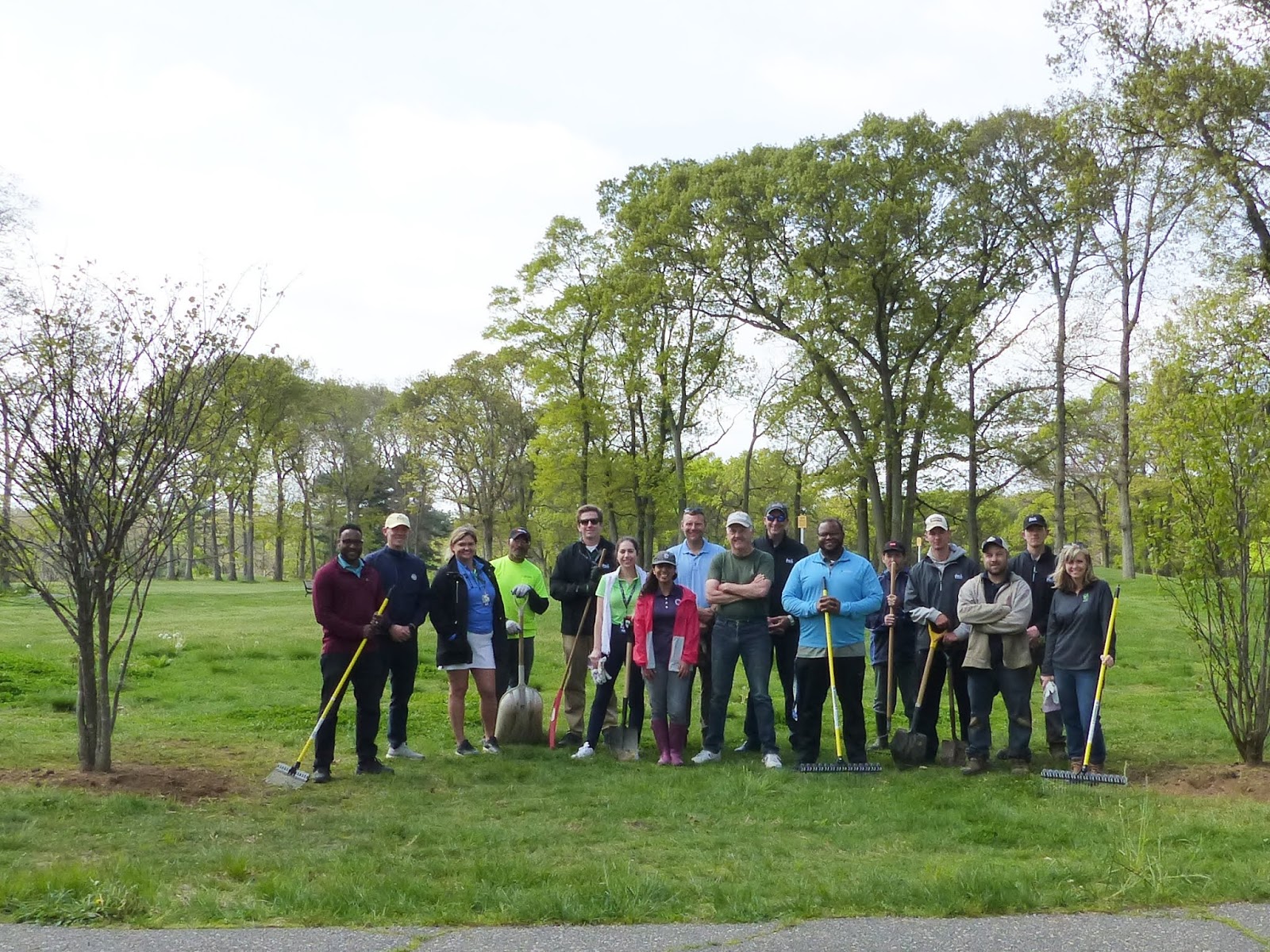
This month, Bethpage State Park proudly participated in a collaborative tree planting event! This was a wonderful opportunity made possible by Lexmark International, the printing supplier of the PGA Championship.  Lexmark reached out to our Director of Agronomy, Andrew Wilson, explaining that their company wished to offset some of their PGA printing and paper-use. Their suggestion? A donation of trees to be planted somewhere suitable on our golf courses! We gratefully accepted this offer, knowing that this sustainability effort would be the perfect way to kick off PGA week...we are NEVER too busy for planting trees! After some thought and discussion, our horticulturist and park ecologist selected eastern redbuds to be the tree of choice. This beautiful flowering species is native to the northeast, and already a deciduous favorite (growing in other locations around our golf courses and polo field). Blooming at the start of spring, these trees are a valuable resource, pr...

Celebrating Citizen Science Day!

Image
Did you know that this past Saturday, April 13th, was Citizen Science Day? If you are wondering what "citizen science" means, you are probably not alone. As a term, it is fairly new...however, as a practice, it has been around forever! Citizen science (also called community science) is the concept that members of the general public (non-scientists) can become more active and collectively aid the improvement of scientific knowledge and advancement! You might be thinking...well, how does that work? The answer is simple; when paired with the right tools and resources (many of which can be downloaded as an app on your smartphone!), anyone with an interest in science can collect and share data with the press of a button. If enough people get involved, this data can be analyzed and as a whole, provide more information than perhaps any one professional would be able to collect on their own. In this way, you become a contributor who can now consider themselves a valuable...

It Is That Time of Year Again, Not Just for Golf but for Our Great Horned Owls!

Image
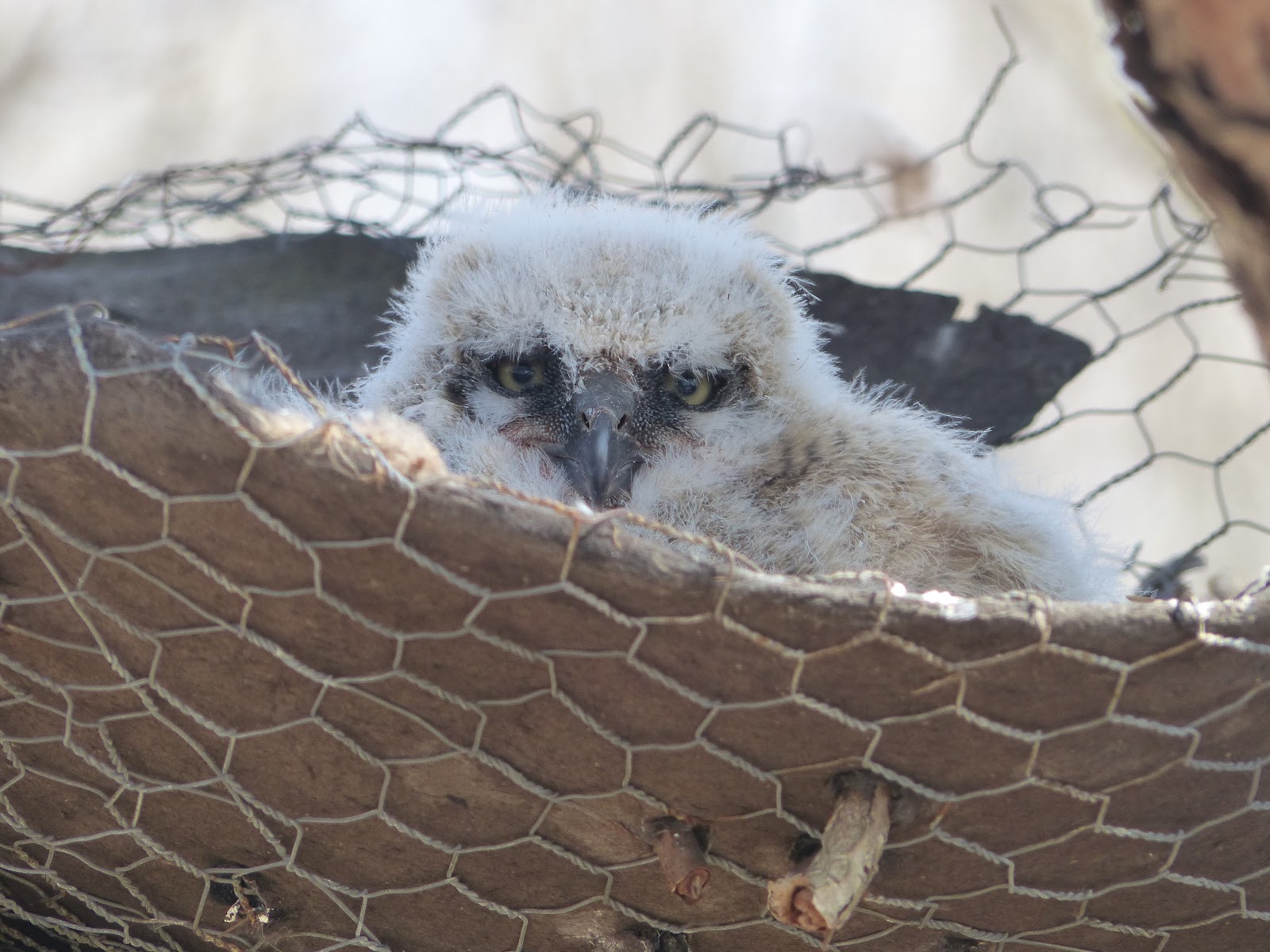
What does a PGA championship and a raptor nesting season have in common? You are probably thinking... not much right? Well this year they are both happening on our Black Course! What an exciting time here at Bethpage State Park! While our maintenance crew urgently prepares the courses for the tournament, our ecology staff is also up in the bucket truck, making sure our great horned owls are carrying on with nesting season as per usual. This year I am excited to announce we have two great horned owl pairs! One pair resides in the same tree as it has in previous years; this is on #7 of the Black Course, where an artificial nest was constructed and installed by part-time employee/biologist Jim Jones.  The second great horned owl pair is actually on the other side of the park, on our Yellow Course. This specific location is behind the 8th green and to the right of the 9th tee. Here the owl pair have adopted an old red-tailed hawk nest (as you might have already concl...

How Do Insects Cope With The Cold at Bethpage State Park!? Here is Insect Survival Tactics 101 - Winter Edition!

Image
    Between whiteout conditions and flurries this month, the courses remain frozen and Bethpage State Park feels a little less active this time of year. This is not just because of the lack of golf-playing; I'm actually referring to the wildlife too!  While many of you know that some birds migrate South and mammals hibernate...have you ever wondered what insects are up to during the winter season? Where do they go? What do they do? How in the world do they survive frigid cold temperatures?     Well, to make this answer even more mysterious and complex, insects are considered the most diverse group of animals on Earth. Whether it is their unique adaptions or how they utilize resources, each species behaves in their own way and their means for survival varies! However, o ne thing that ALL insects have in common is the fact that that they are cold-blooded. Not in the literal sense, but more so that their internal temperature is in accordance with the tempera...

November 18th: Raptor Show at Bethpage State Park

Image
This weekend girl scouts and parents gathered at Bethpage State Park's Carlyle on the Green, eager to watch a raptor show put on by Volunteers for Wildlife.  Volunteers for Wildlife is a local organization dedicated to rehabilitating Long Island's fauna and teaching the public about these efforts. Leading the show, was part-time volunteer, educator and Bethpage State Park employee Jim Jones. Jim personally monitors the red-tailed hawks and great horned owl nests we have here at our park. With his wealth of knowledge and experience we could not think of a better person to educate the scouts on local birds of prey!  While in the past many of these girls attended our other eco-educational programs, this was their first time viewing a live bird show and learning about apex predators. This made it a highly anticipated and important event for all those in attendance. With that being said, we are very proud to thank John Sieb of All Pro Horticulture, for graciously spo...

Happy National Pollinator Week From Bethpage State Park

Image
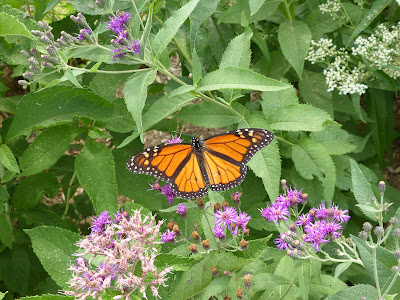
Monarch butterfly and honey bee enjoying blooming, native plants in our picnic area pollinator garden.             Did you know that this year, June 19-25 th is National Pollinator Week?   In fact, the U.S Department of Agriculture has announced this weeklong event every year since 2007 to promote greater protection for pollinators and build awareness for the ecosystem services they provide. The true definition of a pollinator is any organism who visits the same flower species, transferring pollen as they feed and assisting plant fertilization as a result. These animals include insects (such as bees, butterflies, moths, beetles etc.), birds and bats. The assistance that these species provide not only ensures the next generation of plants for parks and backyard gardens… the overall pollination process creates a healthy habitat for wildlife, clean air for us to breathe and crops to eat. However, in recent years, the number of pollinators and the pl...